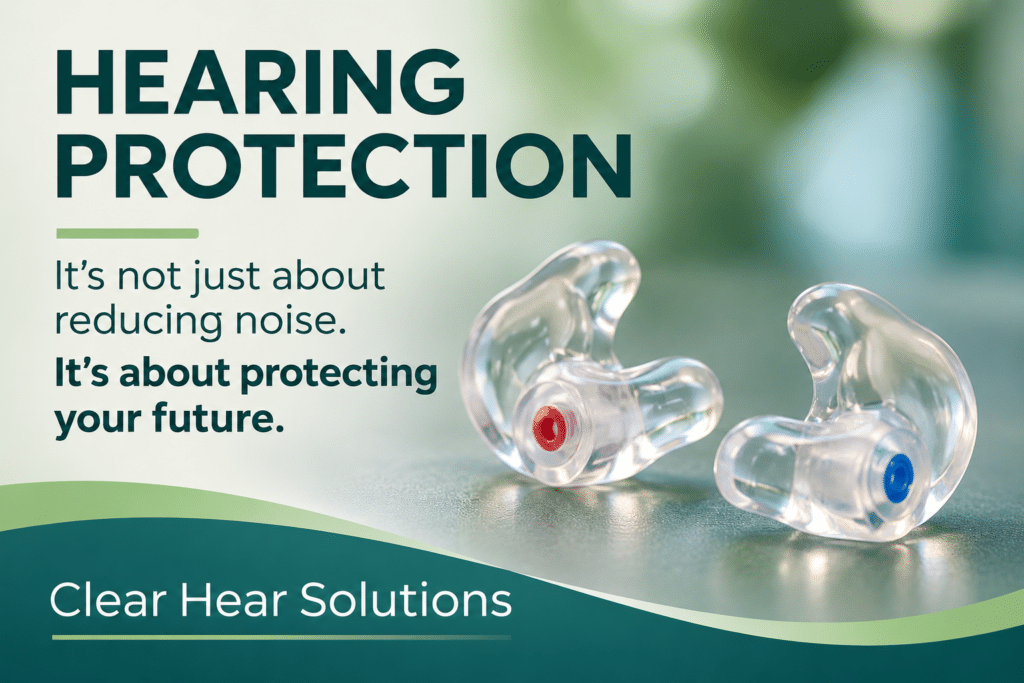
We protect our eyes, our skin and our teeth. But how much thought do we give to protecting our hearing?
We wear sunglasses to protect our eyes, apply sunscreen to protect our skin and attend regular dental appointments to look after our teeth.
Yet hearing protection is something many of us rarely consider until we begin experiencing problems.
Perhaps that’s because hearing damage isn’t always immediately noticeable. Unlike a cut, burn or broken bone, damage caused by excessive noise can occur without pain or any obvious warning.
Unfortunately, by the time we begin noticing the effects, some of that damage may already be permanent.
The good news is that noise-induced hearing loss is largely preventable.
Our Hearing Is Remarkable, but It Has Its Limits
Inside our inner ears are thousands of delicate sensory hair cells responsible for converting sound vibrations into electrical signals that travel to the brain.
These tiny cells play an essential role in our ability to hear and understand the world around us.
However, exposure to excessive noise can damage these cells and their connections.
Unlike some other cells in the body, damaged human cochlear hair cells do not naturally regenerate.
This means that hearing loss caused by excessive noise is generally permanent.
And perhaps most importantly, noise doesn’t have to be painful to be harmful.
You Don’t Have to Work Somewhere Noisy to Damage Your Hearing
When we think about hearing protection, we often picture construction workers wearing ear defenders or musicians performing on stage.
But potentially harmful noise isn’t limited to industrial environments.
Many everyday activities can expose us to excessive sound levels.
Consider how often we encounter:
- Power tools, drills and DIY equipment
- Lawnmowers and garden machinery
- Motorcycles and wind noise
- Concerts, festivals and live entertainment
- Loud music through headphones or earbuds
- Fireworks and other loud celebrations
- Machinery and equipment in the workplace
The risk depends on how loud the sound is, how long we’re exposed to it and how frequently that exposure occurs.
A few minutes around particularly loud equipment may present a greater risk than several hours in a moderately noisy environment.
It’s not simply about how loud something sounds. It’s about the level and duration of exposure.
How Loud Is Too Loud?
Sound is measured in decibels (dB).
As sound levels increase, the recommended duration of exposure decreases significantly.
To put this into perspective, commonly used occupational noise-exposure guidance illustrates the following relationship:
| Sound level | Approximate daily exposure |
|---|---|
| 85 dB | 8 hours |
| 88 dB | 4 hours |
| 91 dB | 2 hours |
| 94 dB | 1 hour |
| 97 dB | 30 minutes |
| 100 dB | 15 minutes |
These figures are illustrative exposure limits based on an equal-energy approach, rather than guarantees of safety.
They demonstrate how quickly potentially harmful noise exposure can accumulate.
In the UK, employers also have legal responsibilities to assess and manage occupational noise exposure under the Control of Noise at Work Regulations 2005.
For everyday activities, the principle remains the same.
The louder the sound, the less time it may take to cause damage.
That Ringing in Your Ears Is a Warning Sign
Have you ever returned home from a concert or noisy event and noticed ringing, buzzing or muffled hearing?
It’s easy to dismiss these symptoms as a normal consequence of a loud evening.
But they can indicate that your hearing has been exposed to excessive noise.
Sometimes these symptoms disappear after a period of rest.
However, temporary improvement doesn’t necessarily mean that no damage has occurred.
Repeated exposure to excessive noise can contribute to permanent hearing loss and tinnitus.
Tinnitus can be particularly troublesome for some people, affecting concentration, sleep and general wellbeing.
If your ears are ringing after noise exposure, don’t simply accept it as part of the experience.
Persistent or recurring symptoms deserve professional assessment. Sudden hearing loss requires urgent medical attention, even if it occurs after noise exposure.
Hearing Protection: It’s Not Just About Wearing Earplugs
When it comes to protecting your hearing, choosing the right protection is just as important as remembering to wear it.
Not all hearing protection is created equal.
Even products with excellent noise-reduction ratings may provide significantly less protection if they don’t fit correctly.
Poorly fitting earplugs can allow excessive sound to enter the ear canal, reducing their effectiveness.
Protection that feels uncomfortable may also be removed frequently, increasing exposure to potentially harmful noise.
Good hearing protection needs to fit correctly, feel comfortable and provide an appropriate level of noise reduction.
Why Consider Custom-Fitted Hearing Protection?
Our ears are as individual as our fingerprints.
Ear canals vary in shape and size, which means a standard earplug won’t necessarily provide the same fit or comfort for everyone.
Custom hearing protection is made using an impression or scan of the individual’s ear, creating a product designed specifically for their ear canal.
Depending on the product selected, benefits may include:
A personalised fit
Custom protection is manufactured to match the individual shape of your ears.
Improved comfort
A well-fitting product may be more comfortable, particularly for people who regularly wear hearing protection for extended periods.
Consistent protection
Correctly fitted and maintained custom earplugs can provide reliable noise reduction when worn appropriately.
Specialist filters
Different filters and attenuation levels can be selected according to the intended activity and noise exposure.
Reusable convenience
With appropriate cleaning, maintenance and periodic fit checks, custom hearing protection can provide a practical long-term solution.
However, custom-fitted protection isn’t automatically superior to every other option.
Correctly fitted disposable earplugs and suitable ear defenders can also provide excellent protection.
The most important consideration is choosing protection that is appropriate for the environment, fits correctly and is worn consistently.
Hearing Protection Doesn’t Mean Missing Out
One of the biggest misconceptions about hearing protection is that wearing earplugs means you won’t be able to enjoy music, conversations or the activities you love.
In reality, hearing protection is designed to reduce noise exposure.
For example, specialist filtered earplugs used by musicians and concertgoers can reduce sound levels while aiming to preserve a more natural balance of sound.
Motorcyclists may benefit from protection designed to reduce wind noise.
People using power tools or working around machinery may require protection with different attenuation characteristics.
Choosing the correct protection matters.
Too little attenuation may leave someone exposed to harmful noise.
Excessive attenuation can also create difficulties in environments where communication or awareness of important warning sounds is necessary.
The goal isn’t always to block out as much sound as possible. It’s to reduce harmful exposure appropriately while maintaining the ability to hear important sounds where required.
What About Headphones and Earbuds?
Headphones themselves aren’t necessarily harmful.
The concern is how loudly and how long we listen.
Listening to music at high volumes for extended periods can contribute to noise-induced hearing loss.
Modern smartphones often include features that allow users to monitor headphone sound levels or set volume limits.
Noise-cancelling headphones may also help reduce the temptation to increase the volume when listening in noisy surroundings.
Simple habits such as keeping the volume comfortable, taking listening breaks and monitoring exposure can make a difference.
Hearing Protection Matters at Every Age
We often associate hearing loss with getting older.
However, excessive noise exposure can affect people of any age.
Children and young adults can also experience noise-induced hearing damage.
Young people who regularly attend loud events or listen to music at high volumes may be exposing their hearing to unnecessary risks.
Appropriately fitted children’s hearing defenders can be useful at loud events, particularly when children are too young to recognise potentially harmful noise levels themselves.
Encouraging good hearing protection habits early in life is an important part of preventative hearing care.
Hearing Damage Can Develop Gradually
One of the difficulties with noise-induced hearing loss is that the changes aren’t always obvious.
Initially, someone may find that they can hear people speaking but struggle to understand what is being said, particularly when background noise is present.
Other possible signs include:
- Frequently asking people to repeat themselves
- Difficulty following conversations in restaurants or social gatherings
- Increasing the television volume
- Ringing or buzzing in the ears
- Feeling that people are mumbling
- Difficulty distinguishing certain speech sounds
Because hearing changes can develop gradually, they may be dismissed as part of getting older.
Although age-related hearing loss is common, a lifetime of excessive noise exposure can contribute additional hearing damage.
We cannot prevent every cause of hearing loss, but we can take steps to reduce avoidable noise-related damage.
Can Hearing Aids Repair Noise-Induced Hearing Loss?
Modern hearing aids are remarkable pieces of technology.
They can improve access to speech and environmental sounds, helping many people with hearing loss communicate more effectively.
However, hearing aids cannot repair damaged sensory hair cells or restore the ear to its original condition.
Even the most advanced hearing technology cannot fully replicate the function of a healthy auditory system.
This is why prevention is so important.
Protecting the hearing you have today may help reduce the need to manage avoidable hearing damage tomorrow.
Looking After Your Hearing Is an Investment in Your Future
We routinely make decisions to protect our long-term health.
We attend dental appointments, have our eyesight checked, monitor our blood pressure and take preventative measures against illness.
Yet hearing health is often overlooked.
Perhaps it’s time we gave our ears the same attention.
At Clear Hear Solutions, we believe good hearing care involves more than identifying hearing loss and providing hearing aids.
It also means helping people understand their hearing, recognise potential risks and take practical steps to protect it.
We provide hearing assessments and custom hearing protection for people who want to take a proactive approach to their hearing health.
Whether you enjoy live music, ride a motorcycle, work in a noisy environment or regularly use noisy equipment, suitable hearing protection can help reduce your risk of permanent hearing damage.
A Final Thought
Think about the sounds that matter most to you.
Your favourite music.
The laughter of your family.
Conversations with friends.
The everyday sounds that make life enjoyable.
Now imagine those sounds becoming increasingly difficult to hear.
Hearing loss can affect much more than our ability to detect sound. It can influence communication, relationships and our enjoyment of everyday experiences.
We cannot prevent every form of hearing loss.
But when it comes to excessive noise exposure, we have an opportunity to make a difference.
At Clear Hear Solutions, we don’t just want to help you hear better. We want to help you protect the hearing you already have.
Because your hearing is worth protecting — today, tomorrow and for all the years ahead.